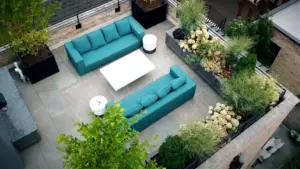
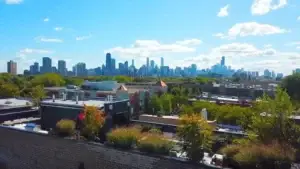
Green rooftop designs come in various styles, and the diverse roofing systems offer environmentally friendly options allowing plants and vegetation to be grown on top of buildings with flat or slightly sloped roofs. These roofs are growing in popularity due to the environmental benefits these roofs can provide, such as reducing a building’s energy consumption, providing habitats for local wildlife, and helping to provide clean air to urban areas.
However, if you are considering a green roof for your home or building, you may be wondering what green rooftop designs are available. Generally, green roof options fall under the designations of extensive, intensive, and semi-intensive. Here is a quick overview of the traditional green rooftop design options to help you decide which type of green roof may be best for you.
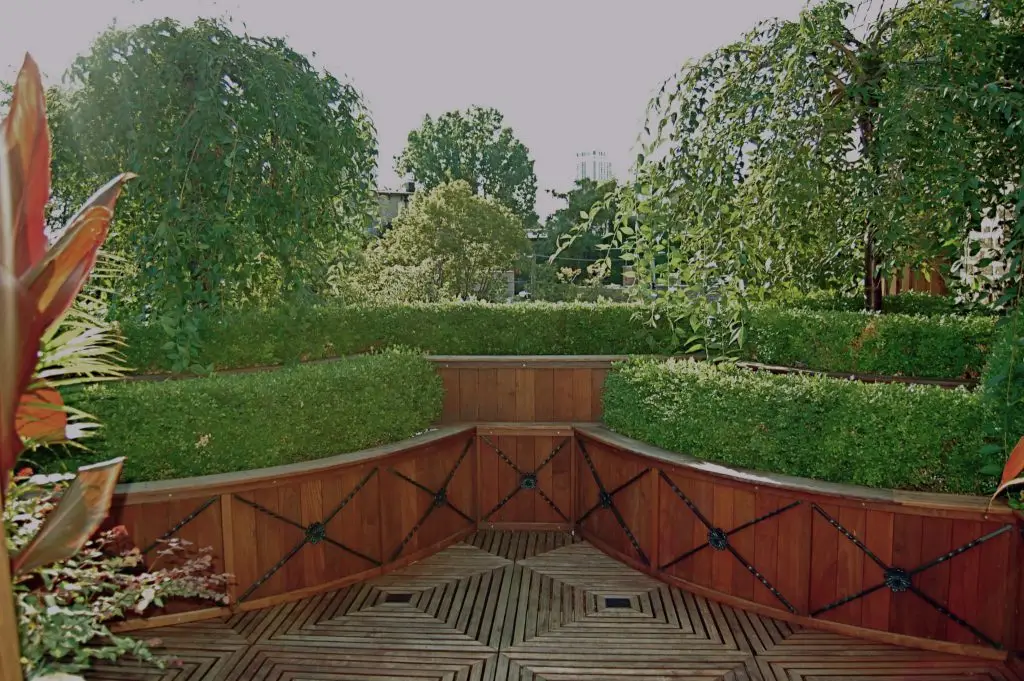
Types of Green Rooftop Designs
Extensive Rooftop Designs
Extensive roofs are perhaps the most common type of green roof options available. Extensive green roofs consist of 3-6 inches of lightweight growing medium and low-maintenance vegetation such as desert grasses, succulent plants, and sedum vegetation. Extensive roofs are popular due to the fact that they are light and are suitable for many buildings, including certain sloped residential roofs. After the first year, extensive roofs do not require watering, and they require little maintenance outside of annual weeding. Extensive roofs are mainly chosen for their environmental benefits as they are not suitable as rooftop gardens.
Intensive Rooftops
Alternatively, intensive green roofs – also known as rooftop gardens – are primarily used on larger buildings with rooftop access. These roofs are much heavier and require much more maintenance as they generally consist of at least 8-12 inches of a growing medium as well as plants that you would traditionally expect to see in a ground-level garden, such as shrubs, flowers, and even trees. Intensive green roofs can even include community features such as walkways, playgrounds, and vegetable gardens. These roofs require as much maintenance as a ground-level garden.
Semi-Intensive Rooftop Design
Semi-intensive green roofs (sometimes also referred to as hybrid green roofs), are a combination of extensive and intensive green roofing. These roofs combine the best features of both intensive and extensive roofs by providing a wider range of plants than extensive roofs while requiring less work than intensive roofs. The weight and maintenance requirements of hybrid roofs fall somewhere between extensive and intensive.
Benefits of Green Roofs
Whichever type you choose, a green roof benefits your building, your neighbors and your bottom line.
Improved air quality
Plants take in carbon dioxide, release oxygen and filter pollutants. The more buildings with green roofs in a neighborhood, the better its overall air quality.
Stormwater management
A well-designed green roof captures rainwater and uses it for the plantings, reducing runoff and easing the load on storm drains during heavy rain and snowmelt.
Cooler cities
Dense urban areas run noticeably warmer than surrounding areas, especially at night. Green roofs are one of the main strategies cities use to reduce urban heat islands.
Noise reduction
Vegetation dampens sound. A Belgian measurement study of green roofs found improvements of up to 10 dB across a wide frequency range under dry conditions, making the building quieter and more comfortable inside.
Urban agriculture
Rooftop gardens can grow food and create a shared place to gather, work together and enjoy nature above the city.
Lower energy costs
Most heat escapes through the roof in winter, and dark roofs absorb heat in summer. A green roof moderates both, which can reduce heating and air-conditioning demand.
Longer roof life
The growing layer protects the roof membrane from sun and temperature swings, which can extend a roof’s lifespan well beyond that of a conventional roof.
Beauty
A green roof turns unused space into a quiet, shaded oasis in the middle of the city.
Ultimately, the type of green roof that will be best for you will depend on various factors, including your budget, what your building can support, and how much maintenance you want to put into your living roof. Contact us for additional information on green roofs and advice on choosing a green rooftop for your building.