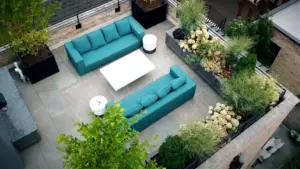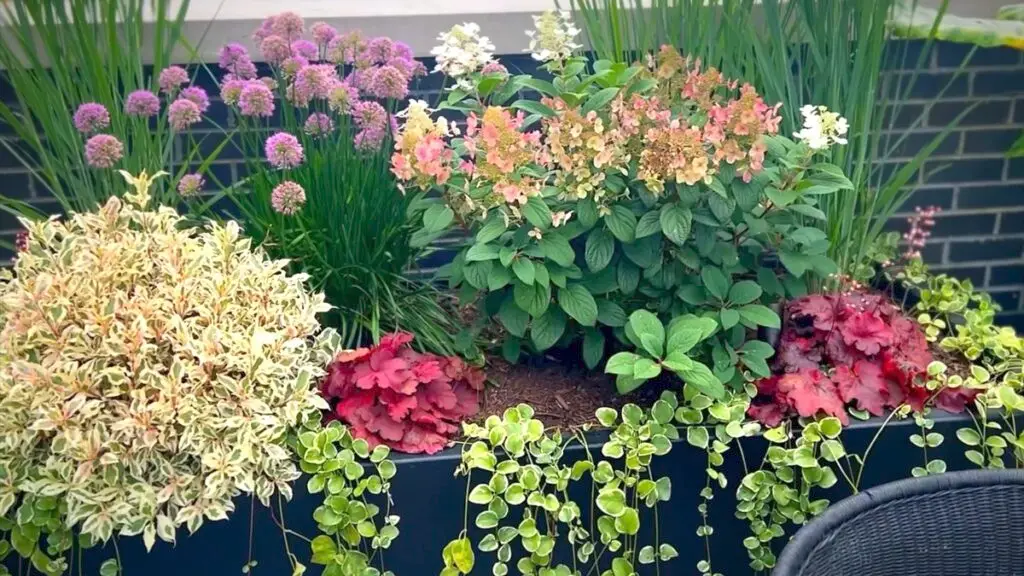
A rooftop garden can look effortless when it is finished well, but the planting plan behind it is rarely simple. Chicago rooftops ask a lot of plants – intense sun, reflected heat, strong wind, shallow soil profiles, and winter exposure that can be far harsher than grade-level conditions. That is why choosing the best plants for rooftop gardens is less about chasing trends and more about selecting varieties that can hold their shape, perform beautifully, and support the way you want to use the space.
For a private roof deck, planting is doing several jobs at once. It softens architecture, frames views, creates privacy, and gives the space a finished, livable feel. The strongest rooftop gardens are not built around a single “showy” plant. They are composed with structure, seasonality, scale, and durability in mind.
What makes the best plants for rooftop gardens?
The right plant for a rooftop is not always the right plant for a backyard. Exposure changes everything. On a roof, containers heat up faster, soil dries out sooner, and wind can shred foliage or stress branches that would be perfectly happy at ground level.
That means the best performers usually share a few traits. They tolerate full sun, handle periods of dryness once established, and maintain a clean habit without constant intervention. They also need to suit the weight limits, planter depth, and irrigation strategy of the space. A lush rooftop planting can absolutely feel generous and layered, but it has to be grounded in the realities of the structure.
For Chicago properties, cold hardiness matters just as much as summer toughness. A plant that looks great in July but collapses after one hard winter is not a luxury choice – it is a replacement cycle. Thoughtful rooftop design favors plants with lasting value.
12 best plants for rooftop gardens
Boxwood
Boxwood remains one of the most reliable choices for rooftop structure. It gives planters a tailored, architectural look and pairs well with modern, traditional, and transitional outdoor spaces. On a roof deck, that clean evergreen mass can anchor seating areas or define edges without feeling bulky.
The trade-off is exposure. Boxwood can struggle in the harshest winter wind if containers are too shallow or unprotected. In the right planter with proper placement, though, it delivers year-round presence that many seasonal plants cannot match.
Upright juniper
When privacy is a priority, upright juniper is often a smarter rooftop choice than broader evergreens. Its narrow habit works well where square footage is limited, and it brings verticality without consuming an entire deck. It also tends to be more wind-tolerant and rugged than many softer-needled evergreens.
This is especially useful in urban settings where screening has to be elegant, not overgrown. Used rhythmically in a row of custom planters, upright juniper can create a refined green backdrop for dining and lounge zones.
Karl Foerster feather reed grass
Few plants are better suited to rooftop conditions than ornamental grasses, and Karl Foerster is a standout. It is upright, durable, and visually calm, which matters when you are composing a polished outdoor environment rather than a loose cottage garden. Its vertical blades and tan seed heads move beautifully in the breeze without looking messy.
It also earns its place because it extends the season. Even in fall and winter, it gives rooftops texture and structure when flowering annuals are long gone.
Switchgrass
Switchgrass brings a slightly softer, more natural character than feather reed grass, but it still has enough discipline for sophisticated rooftop design. Varieties with blue-green foliage or burgundy fall color add dimension without overwhelming the palette.
If your rooftop leans contemporary, switchgrass can keep the planting scheme from feeling too rigid. It works particularly well mixed with evergreens and perennials to create movement against hard architectural lines.
Sedum
Sedum is one of the most dependable answers to hot, exposed rooftop conditions. Its succulent foliage stores water, it thrives in lean soil, and it offers long-season interest with minimal fuss. Low-growing varieties spill nicely over planter edges, while upright sedums contribute late-summer color and strong form.
Not every client wants a rooftop that reads as drought-tolerant planting, and that is fair. The advantage of sedum is that it can be used selectively, woven into a more elevated composition rather than dominating it.
Lavender
Lavender brings fragrance, silvery foliage, and a distinctly refined look to sunny rooftops. In the right exposure and with excellent drainage, it can thrive in containers and add a soft edge to more structured plantings. It is especially effective near dining areas or lounge seating where its scent can be appreciated.
The caution here is winter wetness and drainage. Lavender dislikes sitting in soggy soil, so rooftop success depends on planter design as much as plant selection.
Russian sage
Russian sage is a strong performer where heat, sun, and air movement would overwhelm fussier perennials. Its airy violet-blue flowers and soft gray foliage lighten heavier evergreen compositions and keep rooftop planting from feeling too static.
It does need room to develop naturally. If every planter on a roof is narrow and formal, Russian sage may feel too loose. But in larger layouts, it adds an easy elegance that balances more architectural materials.
Allium
For clients who want seasonal drama without high-maintenance bedding schemes, allium is a sophisticated move. Its globe-shaped blooms rise above lower plantings and read almost like sculpture in spring and early summer. They pair especially well with grasses and evergreen forms.
Because alliums are bulbs, they are not carrying the design alone. They are best used as part of a layered planting plan that has strong bones before and after bloom.
Coneflower
Coneflower offers long bloom, pollinator value, and a sturdy habit that holds up better than many traditional flowering perennials. Newer cultivars expand the color range, but on rooftops, simpler selections often age more gracefully and sit better within a restrained design palette.
This is a good example of where restraint matters. A rooftop garden usually feels more elevated when color is edited and repeated rather than treated like a sampler.
Salvia
Salvia earns its place through reliability. It blooms generously, tolerates heat, and brings saturated color that contrasts beautifully with silver foliage, grasses, or dark containers. It is also useful in repeated groupings, where consistency makes the overall design feel intentional.
Some varieties are more compact and polished than others, so selection matters. On a premium roof deck, plant quality and cultivar choice make a visible difference.
Hydrangea paniculata
Not every hydrangea belongs on a rooftop, but panicle hydrangeas can be excellent in larger planters with enough soil volume. They provide a fuller, more luxurious look and soften hardscapes in a way grasses and evergreens alone cannot. For clients who want a garden with more presence and bloom, they can be an important part of the palette.
They do, however, require space and irrigation consistency. This is where custom planning matters. A plant that is technically possible is not always the best fit if the deck cannot support the planter scale it needs.
Serviceberry
For expansive rooftops with deeper planters and stronger structural capacity, serviceberry can bring a small-tree element that elevates the entire experience. It offers spring bloom, attractive form, and strong fall color. More importantly, it creates a sense of enclosure and maturity that smaller plants cannot achieve alone.
This is not a choice for every project. But on larger urban rooftops, a thoughtfully placed small tree can make the space feel like a true outdoor room rather than a decorated deck.
How to choose plants for your rooftop garden layout
The best rooftop planting plans are built around use, not just appearance. If your primary goal is privacy, evergreen screening and upright grasses should lead the conversation. If entertaining is the priority, fragrance, clean lines, and year-round structure usually matter more than a burst of short-lived color.
Planter depth is another major filter. Deep, custom-built planters open the door to shrubs, larger perennials, and even select trees. Shallower containers call for a more edited palette of hardy, drought-tolerant plants. Trying to force large-scale planting into undersized containers rarely ends well.
Maintenance expectations also deserve an honest discussion. Some clients want a roof deck that looks polished with minimal seasonal intervention. Others are happy to rotate color, refresh annual accents, and keep the space changing throughout the year. Neither approach is wrong, but the planting plan should match the reality of how the space will be cared for.
Why plant selection and construction have to work together
On rooftops, planting design cannot be separated from construction details. Drainage, irrigation, exposure, waterproofing, container material, and load capacity all affect what will thrive long term. This is one reason full-service rooftop projects tend to feel more resolved. The plants are not treated as an afterthought added at the end. They are part of the design logic from the beginning.
At Botanical Concepts Chicago, that integrated approach is often what turns a beautiful concept into a rooftop that still looks exceptional seasons later. The best plants for rooftop gardens are only truly “best” when they are placed in the right conditions and supported by thoughtful design-build execution.
A rooftop garden should do more than survive the season. It should feel composed, inviting, and unmistakably suited to the architecture around it. When the planting is selected with care, the entire space becomes calmer, richer, and far more livable.