A rooftop can feel perfect at 10 a.m. and punishing by 2 p.m. That is why rooftop shade structure options matter so much in Chicago. The right solution does more than block sun – it shapes how the space is used, how long people stay outside, and whether the deck feels like an afterthought or a true outdoor room.
On an urban roof deck, shade is not a simple add-on. It affects furniture layout, structural loads, drainage, views, privacy, lighting, and even how heat collects on surrounding surfaces. For homeowners investing in a custom outdoor environment, the best answer is rarely the first one that looks good in a photo. It has to work with the building, the exposure, and the way the space will actually be lived in.
Rooftop shade structure options start with the roof itself
A rooftop has constraints that a backyard does not. Wind exposure is usually higher. Access for materials and installation can be far more complex. Weight matters. Attachment points matter. So does the relationship between the shade structure and roofing membranes, parapet walls, railing systems, and neighboring sightlines.
That is why a shade strategy should be part of the design conversation early, not selected after the deck is already built. A pergola that feels perfectly scaled on paper may interrupt circulation once planters, dining furniture, and grill clearances are considered. A retractable option may sound ideal until motor placement, wiring, and wind sensors are factored in. Good rooftop design is always about coordination.
Pergolas for architectural presence
For many high-end roof decks, a pergola is the most visually integrated option. It creates a sense of structure and permanence, which is especially valuable on large rooftop spaces that can otherwise feel exposed. Pergolas can define a dining area, anchor a lounge zone, or create a transition between an interior stair landing and the open deck.
The trade-off is that pergolas do not all provide the same level of shade. An open-roof pergola offers filtered light rather than full cover, which some homeowners love in the morning but find less comfortable during peak afternoon sun. Adding slats closer together can improve shade, but orientation matters. So does the path of the sun relative to the building and neighboring walls.
Material selection changes the experience as well. Powder-coated aluminum tends to be a strong fit for rooftops because it is durable, lighter than steel, and easier to maintain in a four-season climate. Wood can be beautiful and warm, but on rooftops it often requires more upkeep and careful detailing to age well. In a premium urban setting, the cleanest pergolas are usually the ones designed to feel native to the architecture rather than decorative on top of it.
Louvered roofs for control and flexibility
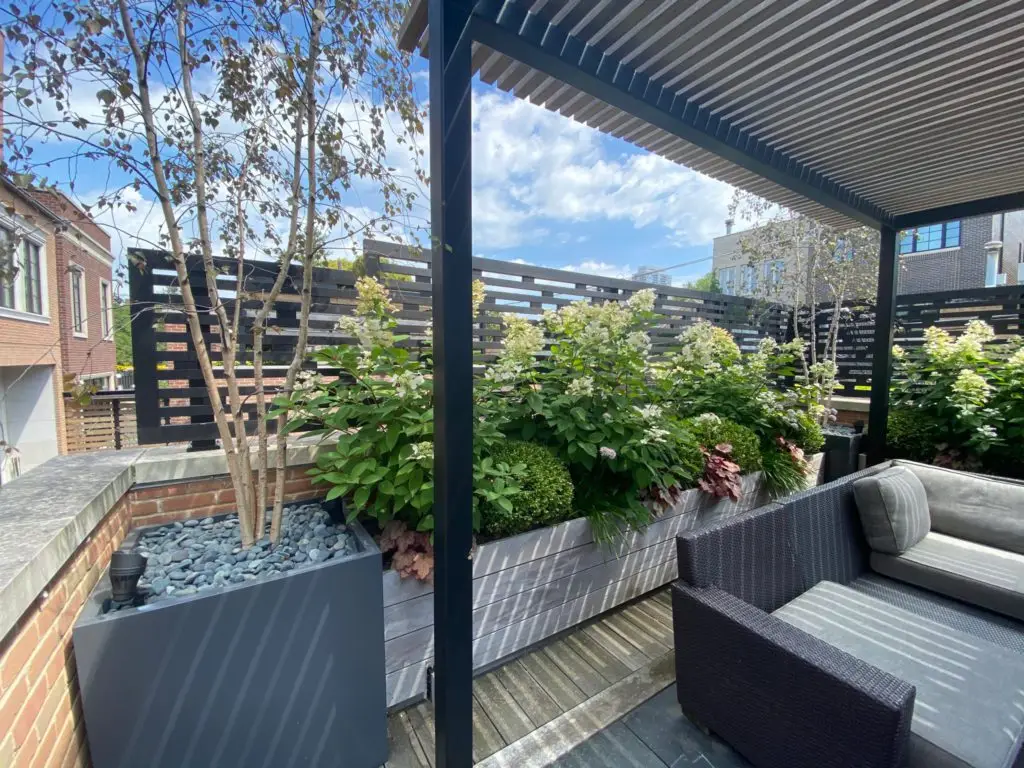
If a client wants a more adaptive solution, louvered roof systems are often worth serious consideration. These structures use adjustable slats that can open for sun and breeze or close for stronger shade and light rain protection. For households that entertain often, that flexibility can be a major advantage.
Louvered systems are especially appealing when the roof deck serves multiple purposes. A dining area may need stronger midday shade, while a lounge zone nearby benefits from open sky in the evening. Being able to respond to weather without giving up the rooftop feeling is the main appeal.
The trade-off is complexity. These systems involve mechanics, drainage planning, and usually electrical coordination. They also require thoughtful structural support and premium installation quality. On a rooftop, details matter. Water management and wind performance are not secondary concerns. They are central to whether the investment performs the way it should over time.
Canopies and tensile structures for a lighter visual footprint
For some rooftops, a canopy or tensile shade structure offers the right balance of coverage and openness. These systems can feel lighter and less imposing than a framed pergola, which can be helpful when preserving skyline views is a priority. They also work well in contemporary designs where a softer overhead element is preferred.
Fabric-based systems vary widely in quality and longevity. On one end are simple seasonal installations. On the other are more engineered custom canopies designed for sustained outdoor use. The difference matters. Chicago weather is demanding, and rooftop exposure amplifies wear.
A canopy can be a smart choice when the design calls for shade without creating a fully enclosed roof room. Still, fabric options usually require more maintenance awareness, and some homeowners prefer a harder architectural line. The right solution depends on whether the goal is visual lightness, year-round permanence, or a balance between the two.
Retractable awnings for targeted shade
Retractable awnings can work well on certain roof decks, particularly when shade is needed in a specific direction rather than across a full overhead zone. They are often most useful where the rooftop connects directly to a penthouse wall or upper-level access structure that can support the system.
Their biggest strength is convenience. Shade can be extended when needed and retracted when open sky is preferred. For homeowners who want sun part of the day and relief during peak exposure, that control can be very practical.
But awnings are not a universal rooftop answer. They are more limited by attachment conditions and wind sensitivity than many people expect. On highly exposed Chicago rooftops, performance depends heavily on siting and product quality. They are best evaluated as one element within the larger deck design, not as a one-size-fits-all fix.
Shade sails for modern simplicity
Shade sails appeal to homeowners who like a clean, modern look and want a less built-out structure. When carefully designed, they can create striking geometry and cast broad shade without adding too much visual mass. They can also be useful in smaller rooftop zones where a full framed structure would feel crowded.
The challenge is precision. Shade sails need proper tensioning, strong support points, and an exact understanding of sun angles. If they are installed casually, they can look temporary rather than intentional. They also tend to be less forgiving in harsh weather and may need seasonal removal depending on the system.
In the right application, shade sails can be elegant. But on luxury rooftops, they need to be designed with the same discipline as any permanent architectural feature.
Fixed roofs and covered pavilions for maximum shelter
At the more substantial end of rooftop shade structure options are fixed roofs and pavilion-style covers. These create the strongest sense of an outdoor room and offer the highest level of sun and weather protection. For clients who want a rooftop kitchen, integrated lighting, ceiling fans, heaters, or a truly sheltered lounge, this type of structure can be the most complete answer.
This is also where structural coordination becomes more serious. A fixed roof adds weight, requires careful permitting and detailing, and changes the character of the deck more dramatically than lighter systems do. It can be exceptional when the property and design support it. It can also be too heavy visually or physically for certain buildings.
The best covered rooftops do not feel dropped onto the deck. They feel composed with the home, the railings, the material palette, and the circulation plan from the beginning.
How to choose among rooftop shade structure options
The right shade structure comes down to a few core questions. How much sun protection is actually needed? Is filtered light enough, or is rain coverage part of the goal? Does the homeowner value flexibility over permanence? How exposed is the rooftop to wind? And how important is it to preserve open sky and views?
Just as important is how the deck will function. A rooftop designed around entertaining often benefits from a more defined shaded area over dining or lounge seating. A quieter retreat may call for selective coverage that leaves much of the deck open. Family use, pet use, cooking equipment, and privacy screening all influence the answer.
Budget matters too, but not only in the initial build. Maintenance, durability, and long-term performance should carry real weight in the decision. A less expensive option that fades quickly or underperforms in rooftop conditions can cost more in the long run than a well-designed permanent structure.
For urban properties, this is where a design-build approach becomes especially valuable. The shade structure should never be treated as an isolated purchase. It should be integrated with finishes, planting, lighting, furnishings, drainage, and structural realities so the entire rooftop feels resolved. That level of coordination is where tailored roof deck construction makes the difference, and it is why firms like Botanical Concepts Chicago approach rooftop spaces as complete environments rather than a series of separate upgrades.
The most successful rooftop shade does not call attention to itself first. It makes the space feel calmer, cooler, and easier to enjoy, which is exactly what a great roof deck should do.