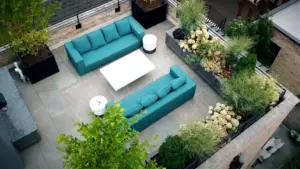
If you own a city property, rooftop space is rarely just “extra.” It is some of the most valuable square footage you have. So when clients ask how much does a rooftop deck cost, the honest answer is this: the range is wide, and the difference between a basic platform and a truly finished outdoor living space can be substantial.
In Chicago, a rooftop deck may start in the tens of thousands for a simpler build, while a fully customized, design-forward rooftop environment can move well into six figures. That range is not about vague contractor pricing. It comes down to structure, access, finishes, utilities, code requirements, and how elevated you want the experience to feel when the project is complete.
How much does a rooftop deck cost in Chicago?
For many Chicago properties, a rooftop deck project falls somewhere between $50,000 and $150,000+, with some high-end installations exceeding that when the space includes luxury finishes, integrated lighting, custom planters, outdoor kitchens, pergolas, irrigation, or major structural work.
A smaller, more straightforward deck with modest material selections may land near the lower end of that spectrum. A larger rooftop designed for dining, lounging, planting, privacy, and entertaining typically climbs quickly because every layer of the project is more specialized than a standard backyard patio.
This is especially true in dense urban neighborhoods, where logistics matter. Getting materials to a roof, protecting the building below, coordinating structural review, and designing around existing conditions all affect cost in ways homeowners do not always see at first.
What actually drives rooftop deck pricing?
The biggest pricing variable is often the one clients cannot see after the project is done: structural capacity. Before any beautiful surface material goes down, the roof and supporting structure have to be able to carry the added weight of the deck system, furnishings, planters, snow load, and people. If reinforcement is needed, the budget changes quickly.
Access is another major factor. On a ground-level landscape project, materials can typically be moved through a yard. On a rooftop, crews may need to work through tight stairwells, limited side access, or crane-assisted delivery. In the city, labor and staging complexity are real line items.
Then there is waterproofing. A rooftop deck is not simply built on top of a roof and forgotten. The system underneath matters just as much as the finished surface. Protection of the roof membrane, drainage strategy, and the relationship between decking, pedestals, and penetrations all require precision. This is where experienced urban design-build expertise matters.
Material selection also has a significant effect. Porcelain pavers, premium composite decking, hardwood, custom metalwork, integrated benches, privacy screens, and architectural railings all create a different budget than a simpler wood deck layout. The same goes for design features such as built-in seating, planter walls, fire elements, and outdoor kitchens.
Typical cost ranges by project scope
A modest rooftop deck with a relatively simple footprint, standard materials, and limited built-in features might begin around $50,000 to $75,000. That usually reflects a cleaner, more functional approach rather than a highly layered outdoor room.
A mid-range custom rooftop deck often falls between $75,000 and $120,000. This is where many Chicago homeowners begin creating a more intentional living space, with upgraded decking or pavers, custom planters, lighting, rail integration, and distinct areas for dining or lounging.
A premium rooftop environment commonly starts around $120,000 and can rise well beyond $200,000 depending on the scale and level of finish. At this tier, the project may include full design development, detailed 3D visualization, specialty hardscape systems, planting design, irrigation, ambient lighting, privacy structures, integrated storage, outdoor cooking, audio, and furnishings coordination.
Those numbers are not meant to be universal. They are meant to show that rooftop decks are custom construction projects, not off-the-shelf add-ons.
What drives Chicago rooftop deck cost
Chicago rooftops ask more of a project team than many suburban outdoor spaces. Weather is one reason. Freeze-thaw cycles, wind exposure, drainage demands, and seasonal use all influence the materials and systems that make sense long term.
Permitting and code review can also shape the process. Depending on the building type, deck location, access point, guardrail requirements, and structural conditions, there may be engineering and compliance considerations that affect both timeline and budget.
Urban density adds another layer. Neighboring buildings, party walls, narrow gangways, parking limitations, and limited on-site staging all make construction more complex. None of that means the project should feel difficult to the client, but it does mean the project should be managed by a team that knows how to design for city conditions from the start.
Design choices that raise cost – and value
Some investments increase the budget because they create a more complete, refined outcome. Built-in planters are a good example. They require coordination, craftsmanship, and often irrigation planning, but they also transform a rooftop from exposed deck space into an outdoor environment with softness, privacy, and architectural structure.
Lighting has a similar effect. A rooftop used only in daylight is one kind of amenity. A rooftop with layered evening lighting becomes a true extension of the home. The same applies to pergolas, shade structures, privacy screens, and custom seating. These features are not mandatory, but they often make the space feel finished rather than temporary.
Utilities matter too. If you want a grill, refrigerator, sink, fire feature, speakers, or heating elements, those additions require thoughtful planning and coordination. They can absolutely be worth it, but they should be considered early, because retrofitting a rooftop later is rarely the most efficient path.
Where homeowners can overspend
One of the most common mistakes is designing the deck surface first and asking structural questions later. If the vision is out of alignment with what the building can support, revisions become expensive.
Another issue is underestimating the value of full-project coordination. Rooftop projects touch multiple disciplines at once – design, engineering, waterproofing, carpentry, masonry, lighting, planting, and often permitting. When too many vendors are involved without a central plan, the budget can drift and the finish quality can suffer.
There is also the temptation to cut cost on the elements no one sees. That is rarely where you want to get aggressive. Drainage, waterproofing protection, substructure quality, and proper detailing are what allow the visible design to age well.
How to budget for a rooftop deck wisely
Start with your lifestyle, not just square footage. A rooftop meant for occasional seating has a different budget than one intended for large-scale entertaining, outdoor dining, gardening, and family use. The more clearly you define how you want the space to function, the easier it is to prioritize where the budget should go.
It also helps to separate must-haves from finish-level upgrades. If privacy is essential, that may deserve more investment than a decorative feature. If the goal is to create a polished extension of the architecture, material quality and built-in detailing may matter more than trying to pack in every possible amenity.
Most importantly, plan around the full picture. Design, structural review, permits, construction, site logistics, finishes, planting, and lighting should all be considered together. That is how you avoid a deck that looks underdesigned or a budget that grows through piecemeal decisions.
Is a rooftop deck worth the cost?
For many Chicago homeowners, yes – especially when the rooftop is treated as a true living space rather than leftover square footage. A well-designed rooftop deck can change how a home feels day to day. It creates room to entertain, decompress, dine outdoors, and enjoy the skyline in a way that is uniquely urban and deeply personal.
It can also strengthen property appeal. Not every project should be viewed through resale alone, but exceptional outdoor space is meaningful in the Chicago market, particularly where private exterior space is limited.
The key is making sure the investment matches the property and the way you want to live in it. A rooftop deck should feel integrated, intentional, and built for the long term.
For homeowners who want that level of result, the best first step is not chasing a quick per-square-foot number. It is having a thoughtful conversation about the building, the vision, and the experience you want the space to deliver. That is where realistic budgeting begins, and where great rooftop projects usually do too.