A flower box should do more than hold plants. In Chicago, it often needs to soften hard architecture, frame a rooftop view, create privacy from nearby buildings, and survive a season of wind, heat, and sudden weather swings. That is why custom flower box installation is less about dropping in a planter and more about designing a built element that belongs to the space.
For urban homes, roof decks, terraces, and front entries, the right flower boxes can change how an outdoor area feels and functions. They can make a narrow balcony feel intentional, turn a rooftop perimeter into a refined edge, or bring seasonal life to masonry and steel. When they are custom-designed and professionally installed, they also solve practical issues that off-the-shelf planters rarely address.
Why custom flower box installation matters
In dense city environments, every inch counts. A standard planter might be close enough in size, color, or proportion, but close enough usually looks temporary. Custom flower box installation allows the dimensions, materials, drainage strategy, and placement to respond to the architecture rather than compete with it.
That difference shows up quickly. On a rooftop, a flower box may need to align with built-in seating, grill stations, or shade structures. On a front facade, it may need to complement window proportions, masonry details, and the character of the home. In a side yard or terrace, it may need to create privacy without adding visual heaviness. A custom approach gives those decisions the attention they deserve.
There is also the question of performance. Chicago weather is demanding, and elevated spaces are especially unforgiving. Wind exposure, intense summer sun, freeze-thaw cycles, and drainage limitations all affect what should be built and how it should be planted. A flower box that looks beautiful in a catalog can fail quickly when it is installed without regard for structure, irrigation, and long-term maintenance.
Where custom flower boxes have the most impact
Flower boxes are often thought of as decorative accents, but in well-designed outdoor environments they work much harder than that. They define zones, shape circulation, and give scale to open areas that would otherwise feel exposed.
Rooftops and roof decks
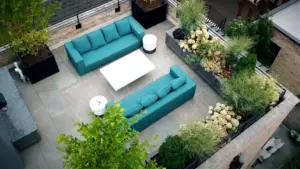
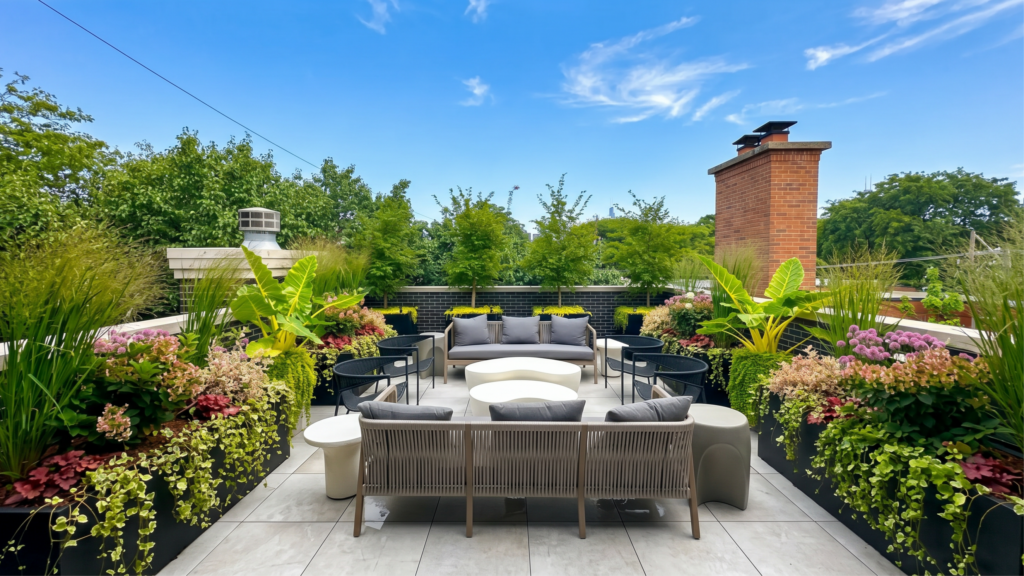
On a Chicago roof deck, flower boxes often act as both architecture and planting. They can create edges without the visual bulk of a wall, screen neighboring views, and introduce softness around dining and lounge areas. Because rooftops come with weight limits, access constraints, and exposure issues, installation needs to be coordinated with the larger construction plan, not treated as an afterthought.
Patios and terraces
At grade or on raised terraces, flower boxes can organize a space with more precision than freestanding containers. They can frame a seating area, define an outdoor kitchen zone, or add depth along perimeter walls and fencing. In smaller city yards, that built-in quality helps the space feel polished rather than crowded.
Entryways and facades
Around front entrances, window lines, and stoops, flower boxes add curb appeal in a way that feels tailored to the home. The best results come when the scale and finish are selected to complement the architecture, whether the property leans traditional, transitional, or distinctly modern.
Design decisions that separate custom from generic
The success of a flower box installation usually comes down to proportion, material choice, and planting strategy. Each one affects appearance, longevity, and upkeep.
Size is the first major decision. A box that is too shallow limits plant health and dries out quickly. One that is too bulky can overwhelm the line of a facade or eat into valuable circulation space. Custom dimensions help balance root depth, visual weight, and how the box relates to railings, windows, decking, or paving.
Material matters just as much. Powder-coated metal, hardwoods, composite systems, fiberglass, and masonry-integrated designs all create different visual effects and maintenance profiles. A sleek rooftop with porcelain pavers may call for crisp, architectural boxes with a refined finish. A lush backyard garden may feel more natural with warmer materials and softer detailing. There is no single right answer, but there is usually a right answer for the property.
Plant selection should never be treated as decoration alone. In exposed urban settings, plantings need to perform. Sun patterns, wind conditions, irrigation access, and seasonal expectations all shape what will thrive. Some clients want bold seasonal color. Others prefer a quieter, evergreen structure with select moments of bloom. Both can be beautiful, but they require different installation and maintenance planning.
The installation side most homeowners do not see
A professionally executed flower box installation includes more than design and placement. The hidden details are what protect the investment.
Drainage is one of the biggest factors. Without proper drainage planning, flower boxes can stain surfaces, stress plants, damage surrounding construction, and create freeze-thaw problems. On rooftops and decks, drainage must also work with the waterproofing and drainage systems already in place.
Weight is another critical issue, especially on elevated structures. Soil, plant material, and retained water add up quickly. Custom flower box installation on rooftops should account for structural limitations from the beginning so the design remains both elegant and safe.
Irrigation is where convenience and plant health usually meet. Many homeowners love the look of abundant containers and flower boxes, but few want the constant hand watering they often require. Integrated irrigation can make a major difference in consistency, especially during Chicago summer heat or for clients who travel frequently.
Access and maintenance should also be considered early. A flower box that looks perfect on paper can become frustrating if it blocks doors, narrows walkways, or makes seasonal change-outs difficult. Good design-build planning solves those issues before construction begins.
Why a design-build approach works better
Flower boxes are small compared with a full roof deck or landscape renovation, but they are rarely simple when done well. They intersect with carpentry, waterproofing, irrigation, lighting, and planting design. That is why a design-build approach tends to produce a stronger result than piecing the work together across separate vendors.
When one experienced team handles concept development, detailing, construction coordination, and planting, the boxes are more likely to feel integrated into the larger outdoor environment. They line up with the architecture. They respect drainage and access requirements. They support the way the space is actually used.
For clients investing in premium outdoor living, that cohesion matters. A custom flower box should not look added on. It should feel like it was always part of the plan.
What to expect from a personalized process
The best custom installations begin with the property itself. That means looking closely at the architecture, the exposure, the intended use of the space, and the level of maintenance the client wants to take on. A rooftop designed for entertaining may need structured perimeter boxes that provide privacy and atmosphere without interrupting views. A front entry may need restrained, elegant planting that complements the home all year.
From there, the process typically moves into material selections, dimensions, finish options, and planting concepts. In more complex projects, visual planning through renderings can help clients understand how the flower boxes will relate to seating, paving, lighting, and surrounding structures before construction begins.
This is also where trade-offs should be addressed honestly. Bigger boxes support healthier plants and stronger visual impact, but they require more room and may increase weight. High-style annual displays deliver dramatic seasonal color, but they usually involve more upkeep than evergreen-focused plantings. Luxury outdoor design works best when beauty and practicality are developed together.
For Chicago homeowners who want a refined, lasting result, custom flower box installation is often one of the smartest upgrades available. It adds softness without sacrificing structure, personality without clutter, and seasonal interest without compromising the architecture. For properties where outdoor space is valuable and highly visible, those details are not minor. They are part of what makes the environment feel complete.
At Botanical Concepts Chicago, that is exactly how these projects are approached – as tailored design elements that support the full outdoor experience, not just accessories placed at the end.
If your patio, rooftop, or entry feels finished in every way except the living layer, flower boxes may be the detail that brings the entire space into focus.