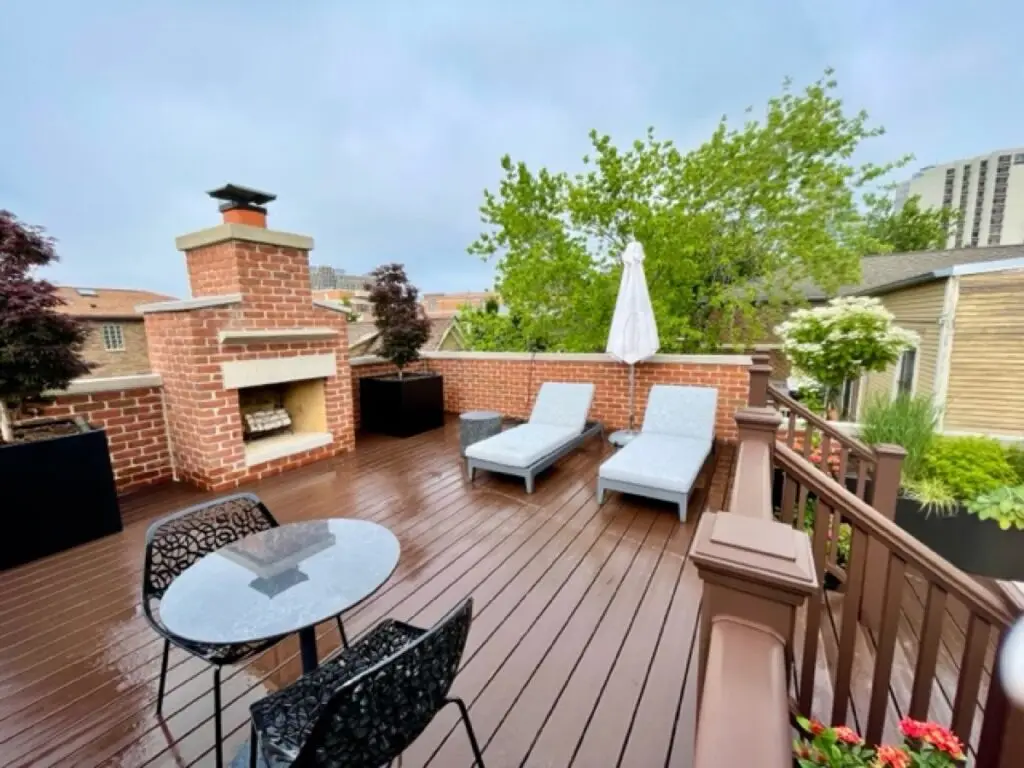
A rooftop in Lincoln Park, a rear yard in Lakeview, a narrow city lot in Bucktown – the right surface material changes how the entire outdoor space feels and functions. When clients ask about wood deck vs pavers, they are rarely choosing between two interchangeable finishes. They are deciding how they want the space to perform, how much maintenance they are willing to take on, and what kind of long-term value they expect from the investment.
In Chicago, that decision deserves more than a quick pros-and-cons chart. Freeze-thaw cycles, drainage, structural limitations, sun exposure, and the architecture of the home all matter. A beautiful result comes from matching the material to the property, not forcing a favorite finish into the wrong setting.
Wood deck vs pavers: the first question is where the project lives
The most practical difference between these materials is not appearance. It is location.
On rooftops, terraces, and elevated structures, wood decking or deck tile systems often make more sense because weight and assembly matter. A framed deck can be engineered around the structure, accommodate slope, and create a refined finished floor over roofing systems. Pavers can sometimes be used on rooftops as pedestal paver systems, but that depends on structural capacity, access, and the overall design intent.
At grade, pavers are often the more durable and efficient choice. They sit naturally within the landscape, transition well to planting beds and walkways, and hold up exceptionally well under Chicago weather when base preparation is handled correctly. A backyard patio that needs to support dining, grilling, circulation, and low-maintenance use usually leans toward pavers for good reason.
That is why material selection should start with construction reality. The best-looking option on paper may not be the smartest solution for the site.
How wood decking changes the feel of a space
Wood has a warmth that is difficult to replicate. It feels residential, tailored, and elevated. In urban environments, especially on roof decks and transitional spaces off primary living areas, wood often creates a stronger sense of continuity with the interior architecture.
For homeowners who want an outdoor room rather than a simple hard surface, wood can be very compelling. It softens the space visually and physically. Underfoot, it is generally more comfortable in bare feet than many hardscape materials, and it can give a custom project a more crafted, furniture-like quality.
The trade-off is maintenance and weathering. Natural wood requires ongoing sealing or staining, periodic cleaning, and attention to movement, checking, and surface wear over time. In Chicago, where winter, moisture, and summer sun all take their turn, that upkeep is not theoretical. It is part of ownership.
There is also the matter of lifespan. A well-built wood deck can serve beautifully for many years, but it will not age the same way a properly installed paver patio does. Some clients are comfortable with that because they value the look and feel enough to justify the maintenance. Others quickly realize they want a lower-intervention material palette.
Why pavers remain a strong long-term choice
Pavers are often selected for their durability, but the real advantage is broader than that. They offer design flexibility, straightforward maintenance, and strong performance in a climate that demands resilience.
For grade-level patios and garden spaces, pavers can handle heavy use without looking tired. They pair well with seat walls, outdoor kitchens, fire features, lighting, and planting design. They also allow a wide range of visual directions, from traditional brick-like patterns to large-format contemporary slabs that complement modern architecture.
If one section becomes damaged or settles, individual units can be adjusted or replaced without rebuilding the entire patio. That repairability matters. So does the fact that pavers generally ask less of the homeowner year after year than natural wood does.
That said, pavers are not maintenance-free. Joint material can shift, weeds can appear if installation or upkeep is neglected, and snow removal requires some care. More importantly, pavers are only as good as the base beneath them. In Chicago, poor preparation leads to movement, drainage problems, and avoidable disappointment.
Cost is not as simple as material price
When homeowners compare wood deck vs pavers, they often start by asking which one costs less. The honest answer is that the budget depends on structure, access, detailing, and the level of design involved.
A straightforward grade-level paver patio may be more economical than a raised wood deck that requires framing, footings, stairs, and guards. But on a rooftop, where a deck system is better suited to the structure, wood may be the more practical path. High-end pavers, intricate layouts, premium edge details, and extensive site work can also move a patio well beyond a basic price range.
The more useful question is this: where do you want to spend the investment? Some clients prioritize immediate visual warmth and a custom deck experience. Others want long-term durability with less seasonal upkeep. Neither is universally right. The material has to align with how the space will be used and how the property is built.
For design-build projects, installation quality matters just as much as line-item pricing. A lower upfront number is rarely a savings if the surface needs correction years earlier than expected.
Design style matters more than trends
Trends come and go. Material fit lasts.
Wood tends to work especially well in contemporary rooftop environments, transitional outdoor rooms, and spaces where planters, privacy screens, pergolas, and built-in seating create a cohesive architectural composition. It can make a city deck feel polished and intimate rather than overly hard.
Pavers excel when the outdoor environment needs to connect multiple landscape elements. If the project includes garden beds, pathways, retaining walls, steps, or a grill area, pavers often create a more integrated language across the site. They can read classic, modern, or quietly understated depending on scale, color, and pattern.
For many custom Chicago projects, the decision is not purely wood or purely pavers. A rooftop may use decking in the primary lounge area and porcelain or paver elements in adjacent zones. A backyard may combine pavers with wood accents in benches or privacy features. The strongest spaces are often layered rather than overly literal.
Maintenance expectations should be honest from the start
This is where many decisions become clearer.
If you enjoy the idea of caring for a natural material and appreciate the character wood develops over time, a wood deck can be deeply satisfying. It offers texture and richness that many homeowners still prefer over any alternative. But it should be chosen with full awareness that periodic maintenance is part of preserving the look.
If you want an outdoor space that remains polished with less hands-on attention, pavers are usually the more forgiving option. Regular cleaning and seasonal care still matter, but the ownership burden is typically lower.
For busy households, that difference can be decisive. The most successful projects are not built around abstract preferences. They are built around real lifestyles.
What usually works best in Chicago
Chicago properties are rarely generic, and neither are the right answers. Roof decks, garages with occupied decks above, and elevated terraces often point toward decking systems because structure and finish coordination are central to the build. Grade-level patios, courtyards, and multi-use backyard environments often benefit from pavers because they perform so well in the landscape and stand up to years of use.
At Botanical Concepts Chicago, that evaluation is part of the design process from the beginning. The goal is not to push one material over another. It is to create a personalized outdoor environment that looks exceptional, functions beautifully, and makes sense for the property over time.
If you are deciding between wood and pavers, the smartest next step is to look beyond samples and think about the full picture – architecture, structure, maintenance, drainage, comfort, and how you want the space to feel on an ordinary Tuesday as much as on a summer evening with guests. The right material should make the space easier to enjoy, not harder to own.