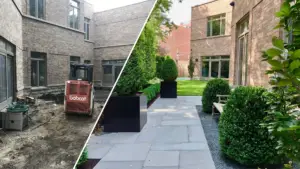
When you are planning a rooftop deck, city patio, or full landscape renovation in Chicago, the hardest part often is not choosing stone, plants, or furniture. It is figuring out who is actually in charge. That is where the design build process explained becomes useful. Instead of hiring a designer, then finding a contractor, then trying to keep everyone aligned, you work with one team that carries the project from concept to completion.
For urban outdoor spaces, that structure is more than a convenience. It can be the difference between a project that feels coordinated and one that gets stalled by miscommunication, budget surprises, or construction decisions that should have been solved on paper first. In dense city settings where access, structural limits, permits, drainage, and material logistics all matter, the relationship between design and construction needs to be tight from the beginning.
What the design build process actually means
At its core, design-build is a project delivery method where one company handles both the creative and construction sides of the work. That usually includes consultation, site analysis, concept development, design drawings or 3D renderings, material selections, planning, pricing, scheduling, and installation.
The benefit is straightforward. The team designing the space is also thinking about how it will be built, what it will cost, how long it will take, and what conditions on site may affect the final result. That alignment tends to create better decisions earlier, when changes are easier and less expensive to make.
For a luxury outdoor project, this matters because beautiful ideas are only valuable if they can be executed well. A roof deck may look striking in a rendering, but if the plan ignores structural load, drainage strategy, privacy, irrigation routing, or access for materials, the design is incomplete. A true design-build approach accounts for those realities from day one.
Design build process explained step by step
Every firm has its own workflow, but a high-quality design-build process generally follows a clear progression.
1. Discovery and consultation
The project starts with a conversation about how you want to use the space. That may sound simple, but it shapes everything that follows. A rooftop meant for quiet evening lounging will be designed differently than one built for large-scale entertaining. A family garden has different needs than a polished courtyard for low-maintenance visual impact.
This early phase is also where site conditions, priorities, investment range, and timeline come into focus. In Chicago, those conversations often include sun exposure, privacy from neighboring buildings, wind conditions on rooftops, drainage concerns, and the realities of moving materials through tight urban access points.
2. Site evaluation and feasibility
Before design gets too far, the team studies the property. On a grade-level project, that might mean measurements, grading, drainage patterns, existing hardscape conditions, and utility conflicts. On a roof deck, it may involve structural parameters, access limitations, building requirements, and coordination with architects or engineers.
This phase is where experienced firms distinguish themselves. A concept can be exciting, but feasibility protects the client from pursuing ideas that will later need to be cut, revised, or value-engineered in frustrating ways.
3. Concept development and visual planning
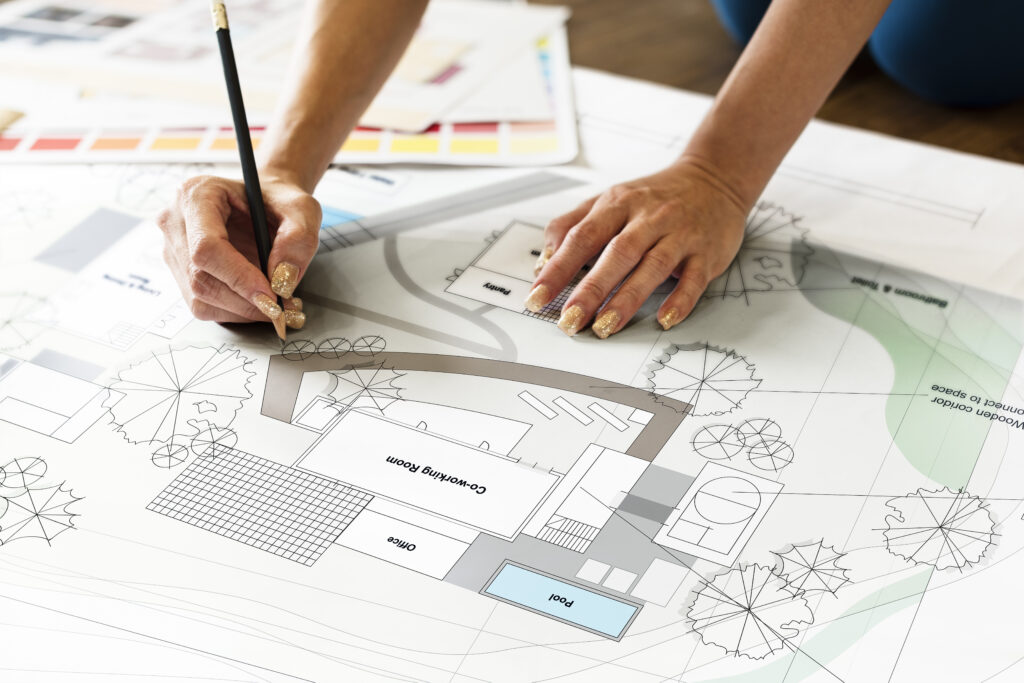
Once goals and constraints are understood, the design takes shape. Layout, circulation, functional zones, materials, planting style, lighting, and architectural details begin to come together. For many clients, 3D renderings are especially valuable here because they make scale and spatial relationships easier to understand.
This is also where the emotional side of the project becomes real. You are no longer talking in abstractions. You can start to see where dining happens, how planters frame views, where lighting adds atmosphere, and how the finished space will feel.
4. Budget alignment
One of the strongest advantages of design-build is that pricing does not sit off to the side. It stays close to the design conversation. As concepts develop, costs can be discussed and adjusted before the project reaches construction.
That does not mean every project is priced instantly or that every choice is fixed early. It means the design team is not working in isolation from the build team. If a material, detail, or structural element changes the investment significantly, that can be addressed while options are still open.
For clients investing in premium outdoor environments, this tends to create a calmer process. There is more transparency, fewer disconnects, and a better chance of preserving the parts of the design that matter most.
Why the design build process works well in Chicago
Chicago outdoor spaces ask more of a project team than a typical suburban backyard. Roof decks require planning around wind, weight, code considerations, and access. Tight lots demand efficient layouts and thoughtful screening. Multi-level urban properties need transitions that feel intentional, not improvised.
That is why the design build process explained in a city context is really about coordination. The design is not separate from the mechanics of execution. Material delivery, crane access, drainage, lighting integration, planting conditions, and seasonal construction timing all affect the end result.
When one firm is responsible for both the vision and the build, accountability is clearer. Questions are answered faster. Field conditions can be addressed without finger-pointing between separate parties. And the project is more likely to retain its original design integrity.
The trade-offs clients should understand
Design-build is not magic, and it is not the only valid way to complete an outdoor project. Some homeowners prefer to hire an independent landscape architect first and bid the work out later. That can make sense in certain cases, especially if the client wants a very broad contractor selection process or a design relationship that stays fully separate from construction.
But that model also asks more from the homeowner. Someone has to coordinate communication, compare scopes carefully, resolve interpretation gaps, and manage the handoff from design intent to field execution. For busy professionals, that can become a project of its own.
The design-build model trades some of that fragmentation for continuity. The best fit usually depends on the client’s priorities. If you value one accountable team, streamlined communication, and a more integrated path from concept through construction, design-build is often the stronger choice.
What to expect during construction
Once plans, materials, and scope are approved, construction begins. This stage should feel organized, not mysterious. You should know the sequencing, the major milestones, and who your point of contact is.
For sophisticated outdoor projects, construction may include demolition, structural prep, carpentry, masonry, decking, lighting, irrigation, drainage work, planting, containers, and finishing details. A well-run design-build firm manages those moving parts under one umbrella.
That does not mean the process is perfectly linear. Weather delays happen. Existing site conditions can reveal surprises. Certain materials may require lead time. The value of a seasoned team is not that challenges never appear. It is that they are anticipated early and handled professionally when they do.
How to tell if a firm truly offers design-build
Not every company using the term delivers the same level of integration. Some outsource major pieces and simply coordinate them loosely. Others offer genuine end-to-end service, with design expertise, planning, construction oversight, and finish-level attention all connected.
When evaluating a partner, look at whether the firm can speak clearly about process, not just aesthetics. Ask how design decisions are budgeted, how site realities are evaluated, how revisions are handled, and who manages execution once work begins. Strong firms are comfortable answering those questions because their process is part of their value.
For complex urban outdoor environments, experience matters. A company that understands rooftops, hardscapes, drainage, planting performance, lighting, and the expectations of high-end residential clients will usually bring a different level of foresight than a generalist operation.
Botanical Concepts Chicago approaches this work as a fully personalized design-build service because city spaces deserve more than pieced-together solutions. They require design precision, construction knowledge, and close client care throughout the life of the project.
Design build process explained in one practical idea
If there is one simple way to think about design-build, it is this: the people imagining your outdoor space should also understand exactly how to bring it to life. That connection protects the design, supports the budget, and creates a more polished experience for the client.
When outdoor square footage is limited and valuable, every decision carries more weight. The layout has to work. The materials have to perform. The build has to honor the vision. And the process should feel thoughtful from the first meeting to the final planting. A well-executed design-build approach does exactly that, giving your space the level of care it deserves before a single stone is set.