A rooftop can have the best light, the best skyline, and the best breeze in the house – and still feel underused if you’re sitting eye-level with neighboring windows. That is usually the real challenge behind small rooftop deck privacy ideas. The goal is not simply to block views. It is to create a rooftop that feels composed, comfortable, and intentional without making a limited footprint feel boxed in.
On compact urban rooftops, privacy has to work harder. Every element is visible. Every inch matters. And in a city like Chicago, privacy solutions also need to handle wind, weather, weight considerations, and building conditions. The strongest designs solve all of that at once, so the deck feels open when you want it to and protected where it counts.
What privacy should do on a small rooftop deck
Privacy is often treated like a single feature, but on a rooftop it usually needs to perform several jobs at once. It may need to screen a nearby condo building, soften noise, define a dining zone, hide mechanical elements, and make the overall deck feel more finished. That is why the best results rarely come from adding one random panel or a tall planter after the fact.
A well-designed privacy strategy starts with sightlines. Where are people looking in from? Are the most exposed views coming from above, across, or from an adjacent terrace? Once those lines are understood, screening can be placed with more precision. That usually leads to a better result than wrapping the entire deck perimeter in the same material.
Small rooftop deck privacy ideas that feel tailored, not bulky
1. Use layered screening instead of one solid wall
On a small deck, a continuous opaque barrier can feel heavy very quickly. Layered screening tends to be more refined. That might mean combining a horizontal slat panel with planting in front of it, or using a partially open screen where full enclosure is not necessary.
This approach gives you privacy without flattening the space. It also creates depth, which matters on rooftops where everything can otherwise read as one hard plane. If your deck is highly exposed, layering often looks more architectural and less improvised.
2. Build privacy into planters
Planters are one of the most effective tools on a rooftop because they can do more than one job. A custom planter can define an edge, anchor seating, add seasonal color, and support privacy screening in the same footprint. That is especially valuable when square footage is limited.
The key is proportion. Oversized planters can dominate a small roof deck, while undersized ones rarely provide enough screening to matter. In many cases, long, narrow custom planter boxes along a perimeter wall offer the cleanest line and the best use of space.
3. Choose upright plant material carefully
Planting for privacy on a rooftop is not the same as planting at grade. Wind exposure, reflected heat, root volume, and winter conditions all affect what will actually perform well. A plant that looks lush at a garden center can struggle quickly if the rooftop environment is too harsh.
For that reason, plant selection should be specific to the site. Upright ornamental grasses, narrow evergreens, and layered mixed plantings can all work, but each comes with trade-offs. Grasses move beautifully and soften hard edges, though they may not provide year-round screening. Evergreens offer more consistent coverage, but they require enough soil volume, proper irrigation, and careful placement to thrive.
4. Add a pergola where overhead exposure is the issue
Not all privacy problems come from the sides. On many city rooftops, the most uncomfortable view is from surrounding upper floors. If that is your condition, vertical screens alone may not solve the issue.
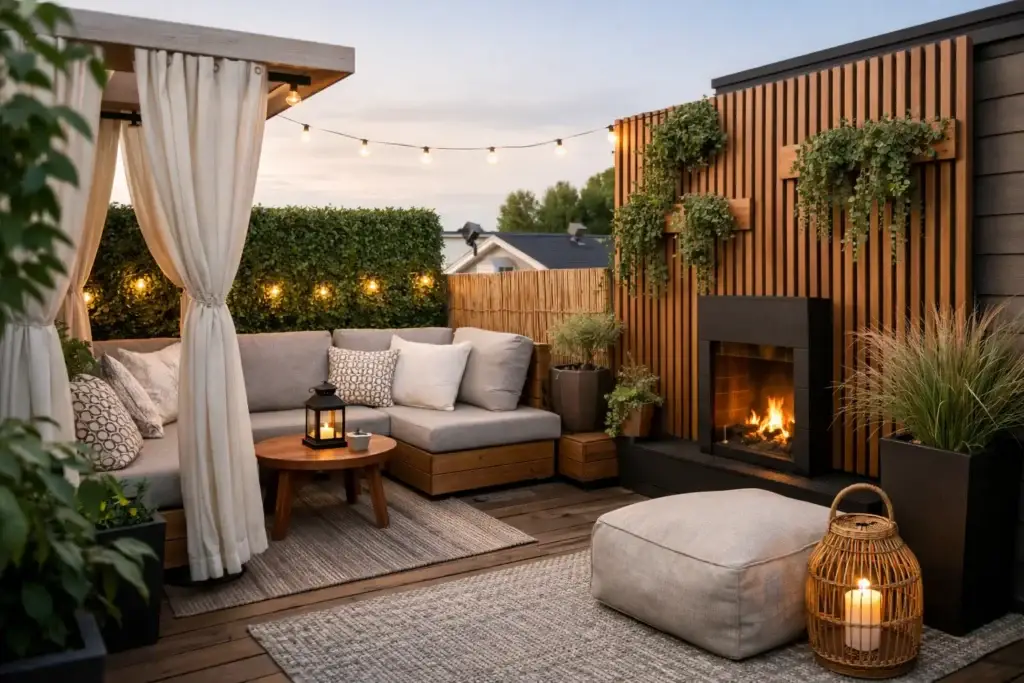
A pergola can help create a stronger sense of enclosure while preserving light and air. It also gives the deck a ceiling line, which makes the space feel designed rather than leftover. Depending on the orientation and nearby buildings, a pergola with integrated slats or layered fabric elements can reduce the feeling of being overlooked without fully closing the rooftop in.
Privacy screens should match the architecture
5. Treat screens as design features, not add-ons
The most successful rooftop privacy solutions feel like they belong to the home and the structure. That means the material palette matters. Wood-look slats, powder-coated metal, cable details, masonry elements, and integrated lighting all create different visual effects.
A contemporary home may call for clean-lined horizontal screens with precise spacing. A more classic urban residence may benefit from privacy elements that feel softer and more garden-forward. The point is not to make privacy disappear. It is to make it feel intentional and elevated.
This is where custom work makes a noticeable difference. Off-the-shelf panels can solve a short-term problem, but they often ignore scale, wind load, detailing, and how the deck is actually used. A custom screen can align with seating heights, frame a view, and coordinate with planters, lighting, and circulation.
6. Use built-in seating to create protected zones
On a compact deck, privacy does not have to happen only at the perimeter. Sometimes the better move is to create smaller protected areas within the space. Built-in seating is particularly useful here because it allows planters and screens to be integrated right behind or beside the seating area.
This makes a lounge corner or dining banquette feel more sheltered without taking up much more room. It also helps organize the deck visually. Instead of one exposed rectangle, the rooftop starts to read as a series of comfortable, purposeful zones.
Smart privacy often solves comfort too
7. Use screens to manage wind
Chicago rooftops rarely deal with privacy alone. Wind is often part of the same conversation. A completely solid barrier may sound appealing, but in some conditions it can create turbulence or put more stress on the structure. A partially open screen can sometimes perform better, both visually and functionally.
That is one reason slatted and perforated materials are so useful. They can soften exposure while still allowing airflow. The right solution depends on the building height, orientation, and surrounding structures, which is why rooftop design requires more technical judgment than many homeowners expect.
8. Don’t forget lighting after dark
Privacy changes at night. During the day, screening blocks unwanted views. In the evening, lighting determines how exposed the rooftop feels from inside and out. A harsh overhead fixture can make the deck feel like a stage, while lower, warmer lighting creates a more intimate atmosphere.
Integrated lighting in planters, steps, and seating can support privacy by making the space feel calm and contained. It also highlights the materials and planting that make the deck feel finished. On a premium rooftop, privacy and ambiance should work together.
The best small rooftop deck privacy ideas are selective
9. Screen where it matters most
It is rarely necessary to enclose every edge equally. In fact, doing so can make a rooftop feel smaller and diminish the very views that made the space valuable in the first place. A more strategic approach is to protect the areas where people actually sit, dine, or gather.
If one corner is exposed to neighboring windows and another faces an open skyline, the design should respond differently to each. Selective screening preserves openness while still making the deck feel comfortable. This is often the difference between a rooftop that feels sophisticated and one that feels defensive.
10. Hide unattractive views, not just people
Privacy is also about what you do not want to look at. Mechanical equipment, service alleys, neighboring walls, and roof clutter can all detract from the experience. Thoughtful screening can redirect attention toward planting, architecture, or a framed city view.
This is especially important on smaller decks because the eye takes in the whole space at once. When visual noise is reduced, the rooftop feels larger, calmer, and more luxurious.
11. Plan for maintenance from the start
A privacy solution that looks beautiful in year one but becomes difficult to maintain is not a strong investment. Plantings need irrigation and seasonal care. Wood materials need upkeep. Fabrics and lightweight screens may degrade faster in exposed rooftop conditions.
A full-service design-build approach helps avoid those issues because materials, detailing, drainage, and access can all be considered together. For homeowners investing in a custom rooftop, that kind of planning protects both the appearance and the longevity of the space.
When custom design makes the difference
Small rooftop deck privacy ideas work best when they are tied to the architecture, the structure, and the way you want to live outdoors. That might mean screening a dining area for evening entertaining, creating a quieter lounge space for family use, or balancing privacy with a signature skyline view. Each rooftop has its own constraints, and that is exactly why tailored design matters.
For urban properties, privacy is rarely just a decorative layer. It affects comfort, circulation, planting design, lighting, and construction detailing. When those pieces are considered together, a small rooftop can feel remarkably generous. Botanical Concepts Chicago approaches rooftop spaces that way – as complete outdoor environments, not isolated features.
If your rooftop feels exposed, the answer is usually not more stuff. It is better design, placed in the right spot, built at the right scale, and shaped around how you want the space to feel when you step outside.