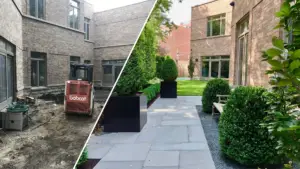
A rooftop with the wrong seating plan looks finished right up until people try to use it. Chairs face the wind. A sectional blocks the best view. Dining seats bake in full afternoon sun. A Chicago rooftop deck builder knows that every outdoor square foot carries real value, and that designing rooftop seating is less about filling space and more about shaping how the space will actually live.
The best rooftop seating feels easy because the hard decisions were made early. That means understanding structure, circulation, exposure, privacy, and scale before a single chair is selected. On an urban roof deck, furniture is never just furniture. It affects comfort, storage, sightlines, maintenance, and even how the entire rooftop is perceived from inside the home.
How to design rooftop seating starts with use
Most rooftop seating problems begin with a vague goal. If the brief is simply “we want a place to sit,” the result is usually generic and underperforming. A better starting point is to decide what kind of sitting the rooftop needs to support.
A space designed for large weekend gatherings should not be planned the same way as a quiet retreat for two. Dining seating needs different clearances than lounge seating. Conversation areas benefit from tighter proportions, while sunset-view seating often works best in a linear arrangement that keeps sightlines open. Families may want flexible seating that can shift between adults entertaining and children using the deck more casually. Empty nesters may prioritize comfort, lower maintenance, and a more refined furniture composition.
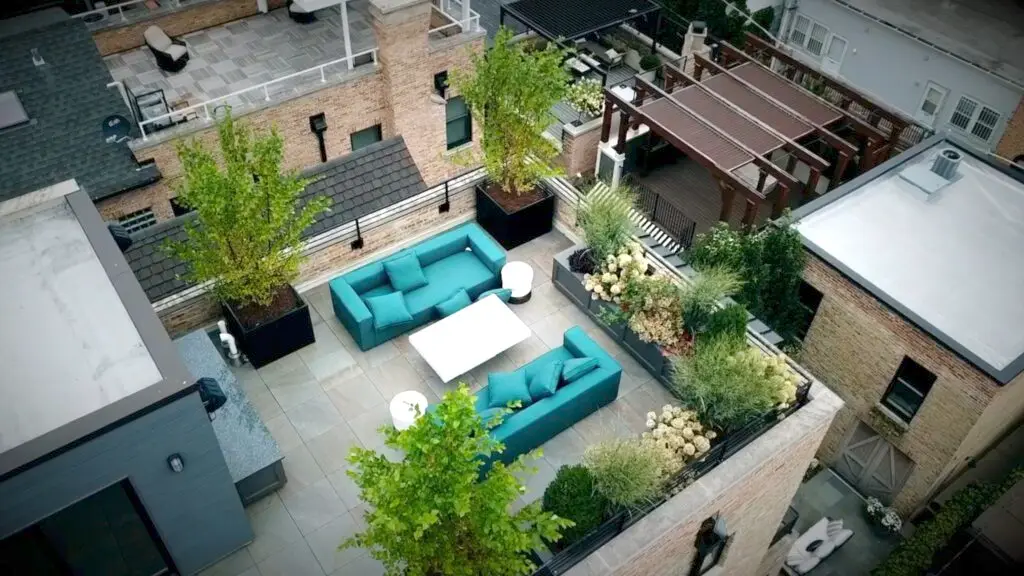
On many city rooftops, one seating zone is not enough. The most successful designs often include two or three distinct moments: a dining area, a lounge area, and perhaps a pair of chairs placed for morning coffee or skyline views. That layered approach makes the rooftop feel purposeful rather than crowded, provided the layout is disciplined.
Start with the roof’s real constraints
Before design preferences take over, the rooftop itself has to lead the conversation. Weight capacity matters. Wind exposure matters. Access matters. So do stairs, door swings, railings, neighboring windows, and the position of mechanical elements.
This is where rooftop design separates itself from ground-level patio planning. A beautiful deep-seat sectional may fit the dimensions on paper but become impractical if it is difficult to carry upstairs, too heavy for the intended assembly, or too exposed to prevailing winds. Built-in seating may solve some of those issues, but it introduces others, including permanence, drainage coordination, and the need for exact construction detailing.
Chicago rooftops also bring serious seasonal stress. Freeze-thaw cycles, intense summer sun, and strong wind loads demand more from every seating choice. Cushions, frames, fasteners, and surrounding finishes all need to be selected with longevity in mind. Premium design is not only about appearance. It is about choosing solutions that will still look composed after repeated exposure to urban weather.
Scale matters more on a rooftop
One of the fastest ways to make a rooftop feel smaller is to oversize the seating. This happens often, especially when homeowners fall in love with indoor-style furniture proportions. Oversized arms, deep frames, and bulky tables can consume valuable square footage and make circulation awkward.
Good rooftop seating design respects negative space. People need room to move comfortably around furniture, pull out dining chairs, set down drinks, and pass through without turning sideways. Even on a generous roof deck, clear circulation keeps the environment feeling calm and polished.
That does not mean everything should be compact. In fact, underscaled furniture can feel temporary or disconnected from an architecturally strong rooftop. The goal is balance. A larger lounge anchor may be right for the main social area, while slimmer-profile chairs and benches work better at the perimeter. Custom solutions are often worth considering because they allow seating to fit the space exactly rather than forcing the layout to adapt to standard retail dimensions.
Built-in seating vs. movable furniture
This choice depends on how fixed or flexible the rooftop needs to be. Built-in seating creates a tailored, integrated look and can maximize every inch, especially along edges or awkward corners. It also performs well in windy conditions and can double as concealed storage.
Movable furniture offers flexibility, easier seasonal updates, and a less permanent commitment. It is often the right choice when homeowners want the rooftop to evolve over time or accommodate different guest counts. The trade-off is that loose furniture can shift visually and physically if the layout is not carefully planned.
In many high-end rooftop projects, the best answer is a combination of both. Built-in bench seating can define the architecture of the deck, while movable lounge chairs or dining chairs keep the space adaptable.
Comfort depends on orientation, not just cushions
People tend to think comfortable seating comes down to padding and upholstery. On a rooftop, orientation often matters more. If seating faces harsh afternoon sun, catches strong wind, or sits too close to a reflective wall surface, even the most luxurious furniture will go unused.
Start by studying how the rooftop feels at different times of day. Morning light may be welcome near a breakfast seating area, while evening entertaining may call for western views with some form of shade control. Wind can change dramatically depending on parapet height, neighboring buildings, and rooftop elevation. Seating that feels pleasant during a quick site visit may be frustrating during an actual dinner party.
This is why integrated design matters. Pergolas, privacy screens, planters, and partial walls are not just decorative additions. They shape the microclimate around the seating. A well-placed planter can soften wind and increase privacy. An overhead structure can make dining feasible at noon. Layered planting can create a sense of enclosure that makes seating feel intentional rather than exposed.
Materials should feel refined and survive the rooftop
Rooftop seating has to work hard. Frames should be durable enough to handle moisture, temperature swings, and UV exposure without looking tired after a season or two. Teak, powder-coated aluminum, and high-quality all-weather woven materials are common choices for a reason. They offer longevity without sacrificing appearance.
Fabric selection deserves equal attention. Performance textiles are essential, but not all of them feel equally elevated. The right fabric palette should complement the architecture, soften the rooftop, and hold up to repeated use. On premium rooftops, color is usually more restrained than people expect. Neutrals, charcoal tones, warm woods, and layered greens tend to age better than trend-driven colors that can date the space quickly.
The material conversation should also include what surrounds the seating. Decking, pavers, lighting, railings, and planter finishes all affect whether the seating feels integrated. The strongest projects are composed holistically, not assembled piece by piece.
Create seating zones with intention
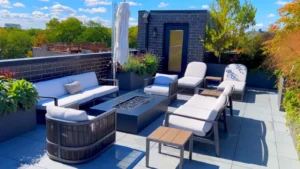
A rooftop feels sophisticated when each seating area has a clear role. That role can be subtle, but it should be legible. A dining table near the grill or outdoor kitchen makes practical sense. A lounge grouping near the best view encourages lingering. A pair of club chairs near a fire feature invites conversation.
Rugs, planters, lighting, and furniture orientation all help define these zones without physically closing them off. On smaller rooftops, multipurpose seating becomes especially valuable. A bench can support dining on one side and lounge use on the other. An ottoman can act as a coffee table, extra seat, or footrest. The goal is to keep the rooftop versatile without making it feel overprogrammed.
It is also worth thinking about how the rooftop looks from indoors. In many urban homes, the roof deck is visually connected to interior living areas through large doors and windows. Seating placement should enhance that view, not clutter it. Clean lines and thoughtful spacing help the outdoor environment read as an extension of the home rather than a separate, furniture-filled platform.
Lighting and privacy complete the seating experience
A rooftop seating plan is unfinished without lighting. Evening use depends on more than one bright overhead source. Layered lighting creates atmosphere and makes the space safer and more usable. Low-level lighting near benches, subtle illumination in planters, and controlled ambient light around dining and lounge zones tend to feel more elegant than overly bright fixtures.
Privacy deserves the same level of planning. Many city rooftops are visually open from neighboring buildings, which can make even beautiful seating areas feel exposed. Screens, strategic planting, and architectural elements can improve comfort without closing in the view. The right balance depends on the property. Some clients want a dramatic open rooftop with minimal interruption, while others prioritize a more sheltered, intimate feel.
There is no universal formula, which is exactly why custom rooftop design matters. Knowing how to design rooftop seating means understanding that beauty, comfort, and function have to work together under real site conditions. When they do, the seating does more than fill the deck. It gives the rooftop its purpose. For homeowners investing in a custom outdoor space, that is where lasting value begins.