A grill set on pavers is easy. A true outdoor kitchen on roof deck is a different level of project entirely – one that has to satisfy design goals, structural realities, city conditions, and the way you actually want to live outdoors in Chicago.
On a rooftop, every inch matters and every decision carries more weight than it would at grade level. Venting, access, utility routing, wind exposure, drainage, surface protection, and sightlines all shape whether a kitchen feels elegant and effortless or cramped and compromised. The best results come from treating the kitchen as part of a complete rooftop environment, not as a standalone appliance package dropped into place.
What makes an outdoor kitchen on roof deck different
A rooftop kitchen has to perform in a tighter, more demanding setting than a backyard installation. The structure below may limit where heavy components can sit. Building access affects what can even be brought to the roof. Wind is stronger, sun exposure is more intense, and surrounding architecture often creates both opportunities and constraints for layout.
There is also a visual standard that tends to be higher on roof decks. These spaces are often directly connected to the home and framed by skyline views, neighboring buildings, and carefully designed lounge areas. A kitchen on a roof deck should feel integrated with that architecture. If the materials, proportions, and placement are off, it shows immediately.
That is why roof deck kitchens require more than product selection. They require a design-build mindset that accounts for utility planning, structural coordination, circulation, finish durability, and the overall experience of the space.
Start with how you want to use the space
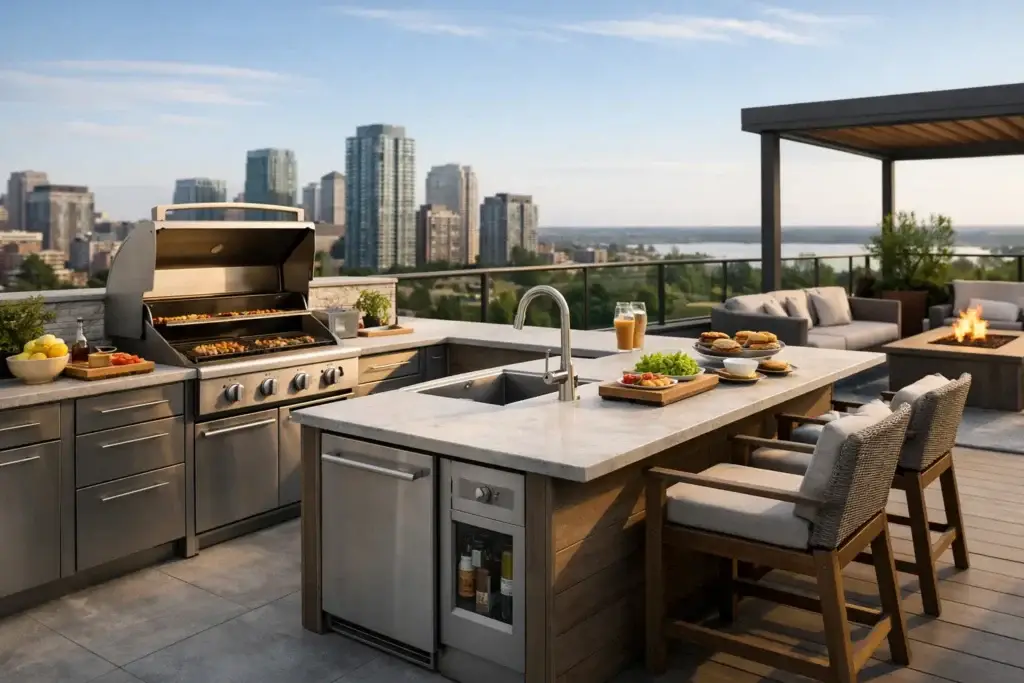
Some homeowners picture a compact grilling station for weeknight dinners. Others want a fully appointed entertaining zone with refrigeration, ice storage, prep space, bar seating, and dedicated dining nearby. Both can be right. The difference is in matching the kitchen to the rooftop rather than forcing a dream checklist into a footprint that cannot support it gracefully.
A good planning process starts with a few practical questions. How many people do you typically host? Will the kitchen be chef-facing and social, or more tucked away to preserve views and lounge space? Do you want quick, low-maintenance cooking or a fuller culinary setup? Are you using the roof primarily during summer evenings, or across shoulder seasons as well?
Those answers influence scale. On many urban rooftops, restraint produces a better outcome than excess. A smaller, beautifully detailed kitchen with smart storage and generous counter space often works better than a bulky arrangement that dominates the deck. The goal is not to fit every possible feature. The goal is to create a space that feels balanced, polished, and easy to use.
Layout matters more than most homeowners expect
The strongest rooftop kitchens are positioned with circulation in mind. Guests should be able to move from the interior to the deck, from the kitchen to dining, and from dining to lounging without awkward bottlenecks. That sounds simple, but on a city roof deck with stairs, railings, planters, pergolas, and furniture zones, flow can get crowded quickly.
The kitchen should support the view, not block it
One of the most common design mistakes is placing a tall kitchen mass directly where it interrupts the best sightline. On a roof deck, visual openness is part of the luxury. Grill hoods, privacy walls, cabinet runs, and tall appliances need to be placed carefully so they support the experience instead of cutting across it.
In some projects, a linear kitchen along the perimeter makes the most sense. In others, an L-shaped configuration creates better prep space while protecting the cook from wind. Occasionally, a compact island works beautifully, but only if there is enough clearance around it and the structure can accommodate the load.
Adjacencies shape how often the kitchen gets used
If the dining table sits too far from the grill, service becomes inconvenient. If refrigeration is separated from the seating area, guests and hosts keep crossing paths. If prep space is too tight, the kitchen becomes decorative rather than functional. The right layout makes entertaining feel natural, which is often the difference between a roof deck that is used occasionally and one that becomes part of daily life.
Structure, utilities, and access drive the real design
This is where rooftop projects separate themselves from ground-level work. A beautiful concept only succeeds if the roof can support it and the building can serve it.
Structural load is a major factor. Cabinetry, countertops, grills, refrigeration, pizza ovens, planters, and people all add weight. Concentrated loads matter just as much as total loads, which means placement can be as important as product choice. Heavier finishes may need to be reconsidered, or elements may need to be distributed differently across the deck.
Utility planning is equally important. Gas, electric, and water lines need to be routed carefully and code requirements must be respected. In many cases, what seems like a simple kitchen addition can trigger a broader coordination effort involving the home, the roof assembly, and access points below. That work is not glamorous, but it is what allows the finished space to feel effortless.
Then there is access. On some urban properties, getting cabinetry, stone slabs, and appliances to the roof is straightforward. On others, it takes cranes, staging, and careful scheduling. Those logistics affect budget, material selection, and construction sequencing. They should be part of the conversation early, not discovered after the design is finalized.
Materials for an outdoor kitchen on roof deck need to work hard
Rooftop exposure in Chicago is demanding. Freeze-thaw cycles, strong sun, wind, rain, and winter storage conditions all put pressure on finishes. Materials that perform well in a sheltered patio may age differently on an exposed roof.
Cabinetry should be specified for true outdoor use, with finishes that hold up to temperature swings and moisture. Countertops need to resist staining, fading, and cracking while still delivering the refined look expected in a premium outdoor environment. Flooring around the kitchen should be slip-resistant, durable, and compatible with roof deck assemblies.
It is also worth thinking about maintenance honestly. Some homeowners are happy to care for natural materials that develop character over time. Others want a cleaner, more controlled finish with minimal upkeep. Neither approach is wrong, but expectations should match the specification from the start.
Wind, heat, and comfort should shape the design
A rooftop kitchen that looks exceptional in a rendering can still underperform if microclimate is ignored. Wind can disrupt burners, make bar seating uncomfortable, and reduce how often the space is used. Afternoon sun can overheat prep areas and refrigeration zones. Reflected heat from surrounding surfaces can change where people naturally gather.
This is why the kitchen should be designed as part of a complete comfort strategy. Privacy screens, pergolas, planters, overhead structures, lighting, and adjacent shade all matter. Even small moves, like orienting the grill differently or shifting the counter edge away from prevailing wind, can improve usability.
For many clients, the most successful roof decks are the ones that soften the rooftop environment rather than fight it. Layered planting, integrated lighting, and well-planned seating make the kitchen feel like part of a larger outdoor room. That is often where the real value lies.
A custom approach usually pays off
Modular kitchen components can make sense in certain rooftop applications, especially when access is limited or the desired program is compact. But many city roof decks benefit from a more tailored solution. Custom sizing can preserve circulation, align with architectural details, and make better use of difficult corners or narrow spans.
It also helps the finished kitchen feel intentional. On premium urban properties, proportion matters. A kitchen that is too deep, too tall, or visually disconnected from the rest of the deck can make the entire project feel less refined. A custom design solves for both performance and appearance.
That is a major reason homeowners often choose a single experienced partner for rooftop design and construction. Firms like Botanical Concepts Chicago approach these projects with the benefit of local rooftop experience, detailed planning, and a clear understanding of how design, permitting, construction, and finish work need to align.
Budget is not just about appliances
When homeowners first price a rooftop kitchen, they often focus on the grill, refrigerator, and cabinetry. Those are important costs, but they are only part of the picture. Structural review, utility work, crane access, custom fabrication, specialty finishes, and rooftop construction logistics can have just as much impact.
That does not mean every roof deck kitchen has to become a large-scale investment. It does mean the budget should reflect the realities of the site. In many cases, a simpler kitchen executed beautifully is a stronger investment than a feature-heavy plan that strains the space or the budget.
The most successful projects are clear about priorities. If entertaining is the main goal, counter space, storage, lighting, and nearby seating may matter more than adding every possible appliance. If cooking is central, then utility planning and prep functionality deserve more of the investment. Good design helps those choices feel strategic rather than limiting.
A roof deck kitchen should make the space easier to enjoy, not more complicated to own. When the layout is disciplined, the materials are right for the exposure, and the construction is guided by real rooftop expertise, the result feels natural – as if the kitchen was always meant to be there. That is the kind of outdoor living upgrade that continues to reward you long after the first dinner party ends.